
Please call for information, and check back for events happening soon.
Capital Ridge Tree Farm

Getting your tree off to a good start

Buying the tree is the easy part. Here's everything we'd tell you standing in the driveway with it loaded in your truck: how to plant it, how to water it, and what it needs through its first few seasons.

Planting, step by step

Plan on an hour. The two things that matter most are planting at the right depth and keeping the root ball intact. Get those two right and the tree will forgive almost anything else.

  1. Find the trunk flare first

    Before you dig anything, scrape back the loose soil at the top of the root ball until you find the trunk flare, the point where the trunk widens as it meets the roots. That flare is your depth guide, and it is often an inch or two below the surface.

  2. Dig wide, not deep

    Make the hole two to three times as wide as the root ball but no deeper than the root ball itself. Planting too deep is the single most common way a healthy tree gets killed slowly. When it's set, the trunk flare should sit right at ground level.

  3. Keep the root ball intact

    Your tree was freshly dug, so handle the root ball gently and keep it in one piece. Carry it by the ball or the basket, never by the trunk, and set it in the hole intact. If it is balled and burlapped, settle it in place first, then cut away the twine and fold back or remove the burlap from the top of the ball. There are no circling roots to fix.

  4. Backfill with the soil you dug out

    Don't add compost, peat, or potting mix to the hole. Amended backfill encourages roots to stay in the nice pocket you made instead of spreading into native soil. Refill with the original dirt and firm it gently with your hands or your boot.

  5. Mulch, but keep it off the trunk

    Two to four inches of wood mulch over the root zone holds moisture and keeps mowers away. Pull it back a few inches from the trunk so it never touches the bark. No volcanoes.

  6. Water it in, deeply

    Soak the root ball and the ground around it right away. This settles the soil against the roots and gets the tree started. Then follow the watering schedule below, which matters more than anything else you'll do this year.

Planting guidance follows Iowa State University Extension's recommendations for planting trees in Iowa.
Water is the whole game

More new trees die of thirst than anything else, and a surprising number drown from kindness. The trick is deep, infrequent soaks rather than a daily sprinkle, easing off as the roots reach out.

Roots live in the top 16–20 inches of soil. That's the zone you're trying to wet, right at the root ball and just beyond it.

Days 1–5
Every dayWater slowly onto the root ball itself, not just the surrounding lawn. A freshly dug tree is living on a reduced root system and cannot reach far yet.
Weeks 1–4
Every 2–3 daysTaper off gradually. Check the soil before watering. Damp means wait.
After ~5 weeks
Every 7–14 daysA deep soak when the top few inches of soil are dry beats a daily sprinkle.
Years 1–2
During dry spellsKeep watering through droughts and heat until the tree is established.
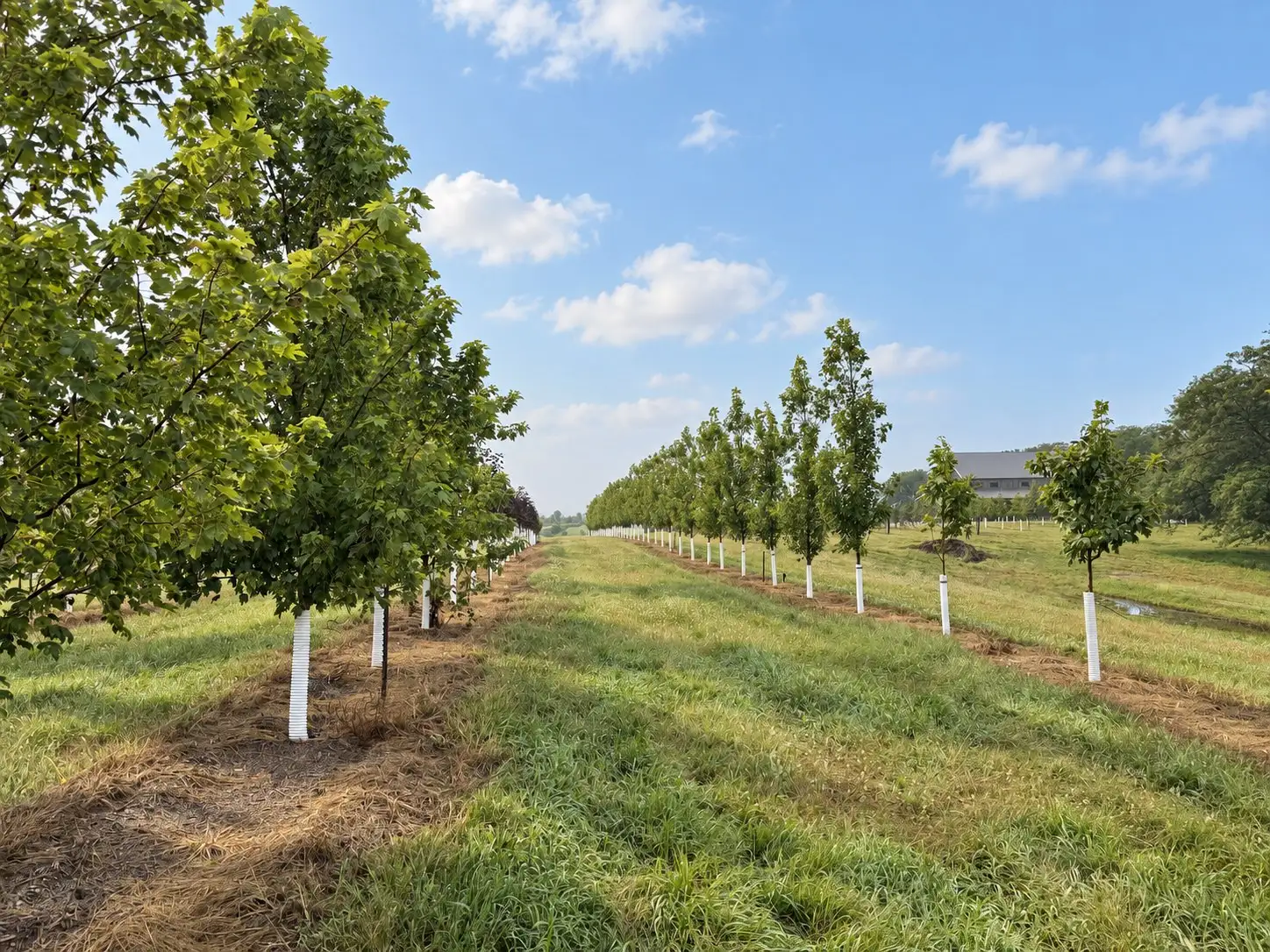
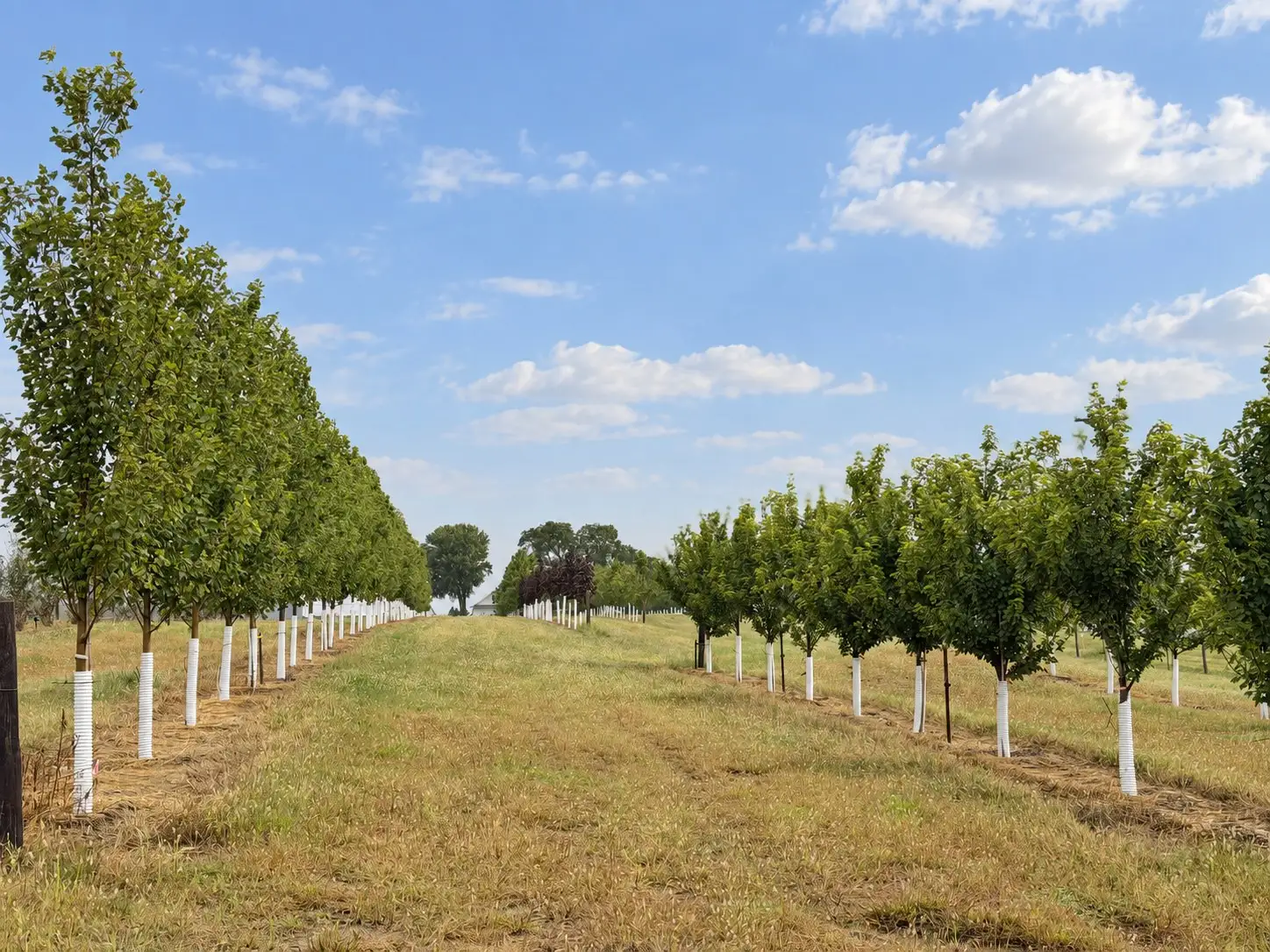
Rows of young trees running toward the treeline at Capital Ridge

Through the year

Spring

Pull mulch back to check for damage, then top it up. Hold off on fertilizer the first year. A newly planted tree is growing roots, not leaves, and feeding it pushes growth it can't support yet.

Summer

Watch for wilting during hot, dry stretches and water deeply when you see it. Keep grass and weeds out of the mulch ring; they compete with the tree for water more than people expect.

Fall

Keep watering right up until the ground freezes. Trees lose moisture all winter and go into the cold thirsty otherwise. Fall is also one of the best times to plant, with mild weather and workable ground.

Winter

Young, thin-barked trees like maples can sunscald on bright winter days. A white trunk wrap from late fall through early spring prevents it. If deer are a problem on your place, add a wire cage.

Questions we get asked

If yours isn't here, call us. We'd rather talk it through than have you guess.

When is the best time to plant a tree in Iowa?

Spring and fall are both excellent planting windows in southwest Iowa. Spring runs from late March through early June, and fall runs from late August through mid-October. Those windows matter to us because your tree is dug fresh the day you buy it, and mild weather with workable ground gives it the easiest possible start.

How often should I water a newly planted tree?

Water every day for the first four or five days, then taper off. By about five weeks after planting, a thorough soak every 7 to 14 days is usually enough. Keep providing supplemental water during droughts and hot spells for the first year or two while the tree establishes. Tree roots live in the top 16 to 20 inches of soil, so that is the zone you are trying to wet.

How deep should I plant my tree?

No deeper than the root ball. Find the trunk flare, where the trunk widens into the roots, and make sure it sits level with the surrounding ground when you are done. Planting too deep suffocates roots and is the most common cause of slow decline in young trees.

Should I add compost or fertilizer to the planting hole?

No. Backfill with the same soil you dug out. Adding compost, peat, or potting mix creates a pocket of rich soil that discourages roots from spreading into the surrounding ground. Skip fertilizer the first year as well. The tree is putting its energy into roots, and feeding it encourages top growth the root system cannot yet support.

How is my tree dug and handled?

Our trees grow in the ground here on the farm. Once you pick one, we dig it to order, either with a tree spade or balled and burlapped. Either way the tree has just lost part of its root system, so the watering schedule above is not optional. It is what gets the tree established.

How fast will my tree grow?

It depends on the species and how well it is watered. Among what we grow, the Freeman maples (Celebration and Marmo) and the Shummard Oak are the quickest to make an impact. Burr Oak is slower but far longer lived. Ask us and we will tell you honestly what to expect.

Do I need to stake my new tree?

Usually not. A tree that moves a little in the wind builds a stronger trunk and better root anchorage. Stake only if the site is very windy or the tree will not stand upright on its own, and if you do, use a wide, soft strap and remove it after the first growing season.

Still have a question?

Cory and Mandy would rather answer the phone than have you lose a tree. Call anytime, or bring the question out to the farm.